Seeking knowledge and academic training opportunities is very important in building the future success of a graduate student. The generous award from the SOT Supplemental Training for Education Program (STEP) enabled me to attend a 5-day course in Molecular Prevention at the National Cancer Institute (NCI) in Rockville, Maryland. My dissertation research is on the genetic and epigenetic changes that arsenic can cause and their effect on the mechanisms of arsenic-induced skin cancer, particularly in miRNAs. Therefore, learning about new research concerns and orientations is very important in the field of cancer study.
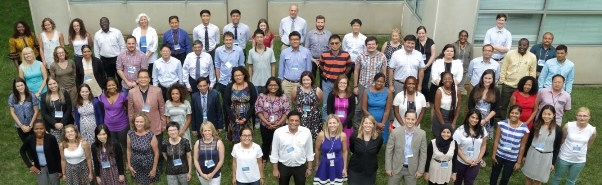
Group photo of all the fellows who participated in the National Cancer Institute Molecular Prevention 5-day course
The Molecular Prevention course addressed how cancer arises and how tumors differ at the molecular level. The course also included discussions of cancer genomics, epigenomics, nutrigenomics, radiomics, and metabolomics. Furthermore, the importance of cancer immunoprevention and early detection biomarkers including microRNAs was covered. It also focused on the importance of using multi-omic data for better risk stratification (both before and after cancer diagnosis) and harnessing its potential for precision medicine in cancer. I am very interested in environmental toxicology and the knowledge I gained from the course will be very helpful in the near future as my goal is to continue my research in the etiology and the mechanisms of toxicant-associated diseases.
Others may be interested in this one-week course on the molecular aspects of cancer prevention at the NCI. Students can apply directly from the Cancer Prevention Fellowship Program webpage by the beginning of March. The course was a great experience. I met people in the cancer medical field from over 20 countries, shared their research experience, learned from their expertise, and familiarized myself with the issues they raised during the course. It also was a great opportunity to get in touch with the NCI faculty and have one-on-one discussions following each session during in which I was able discuss my individual research interests and future career opportunities. The class provided me with incredible appreciation for the toxo-genomic field and how the implications of different techniques in genomics and epigenomics can be great tools for my current research project and my future projects.
The STEP award is a great opportunity for graduate students. It enables us to obtain additional training related to toxicology that will enhance career opportunities outside the umbrella of their graduate training and research program. I am very grateful for the award and I highly recommend graduate student members of SOT to take advantage of such a fabulous opportunity.
The next deadline for applications is October 9.