
Two notable SOT awards, the Enhancement of Animal Welfare Award and the Public Communications Award, honor those who are making a difference through advancing the way testing is conducted and the way toxicology is viewed publicly, respectively. If you know someone deserving, consider nominating them for these prestigious awards.
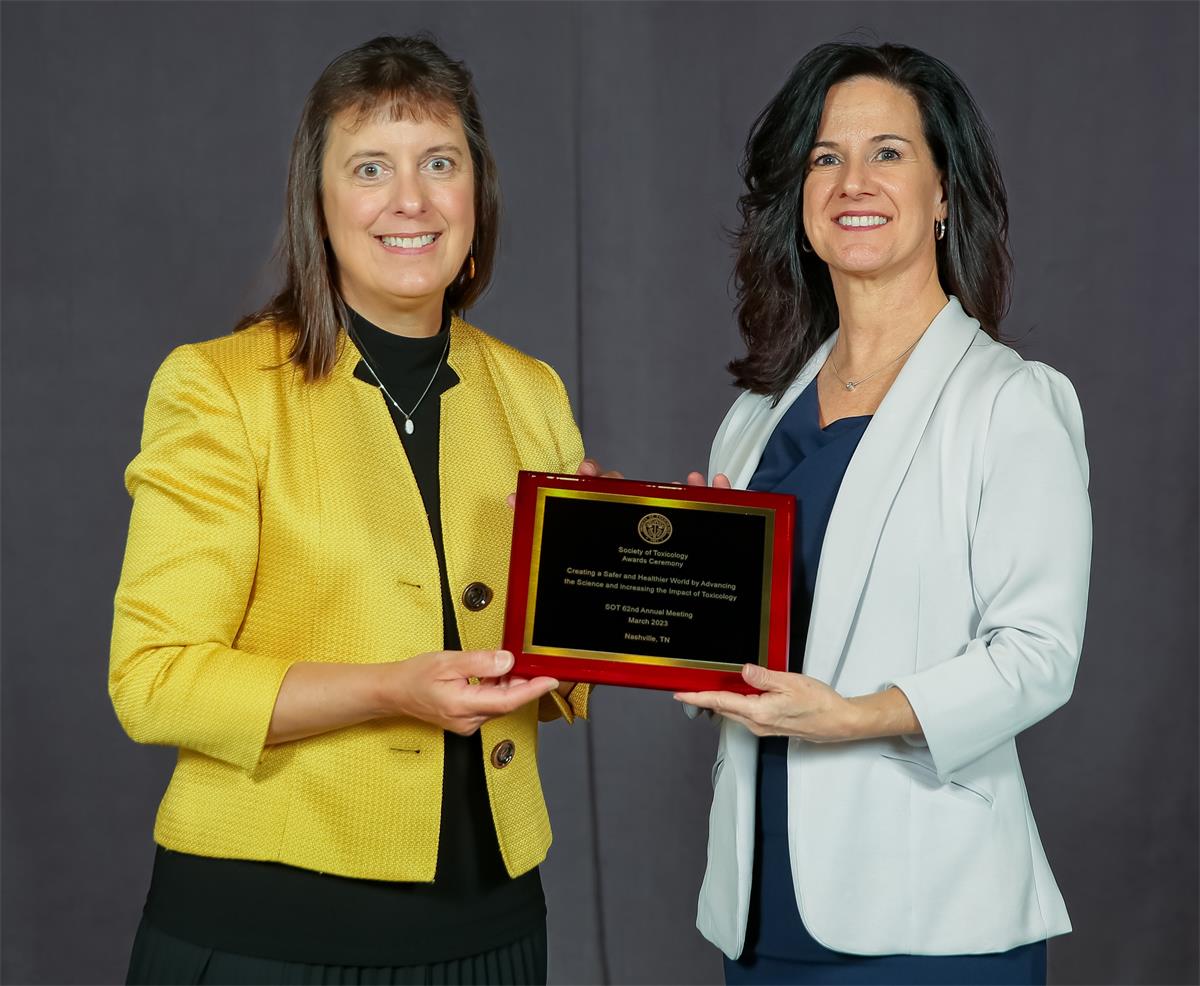
2023 SOT Enhancement of Animal Welfare
award recipient Erin H. Hill (right) with
Sue Marty, a former SOT Councilor (left)
Enhancement of Animal Welfare Award
The Enhancement of Animal Welfare Award recognizes SOT members who advance toxicological science by developing and fostering the implementation of methods that reduce the need for experimental animals. This work can include contributions to developing or promoting ways to replace, refine, or reduce animal use in research or outstanding efforts in ethical use of animals in research—whether through seminal work or long-term dedication.
Public Communications Award
The Public Communications Award acknowledges individuals who excel in effectively communicating toxicological issues to the public. Awardees must demonstrate significant and sustained contributions to the public awareness of toxicology through media such as books, brochures, public presentations, education courses, public forums, newspapers, and more.
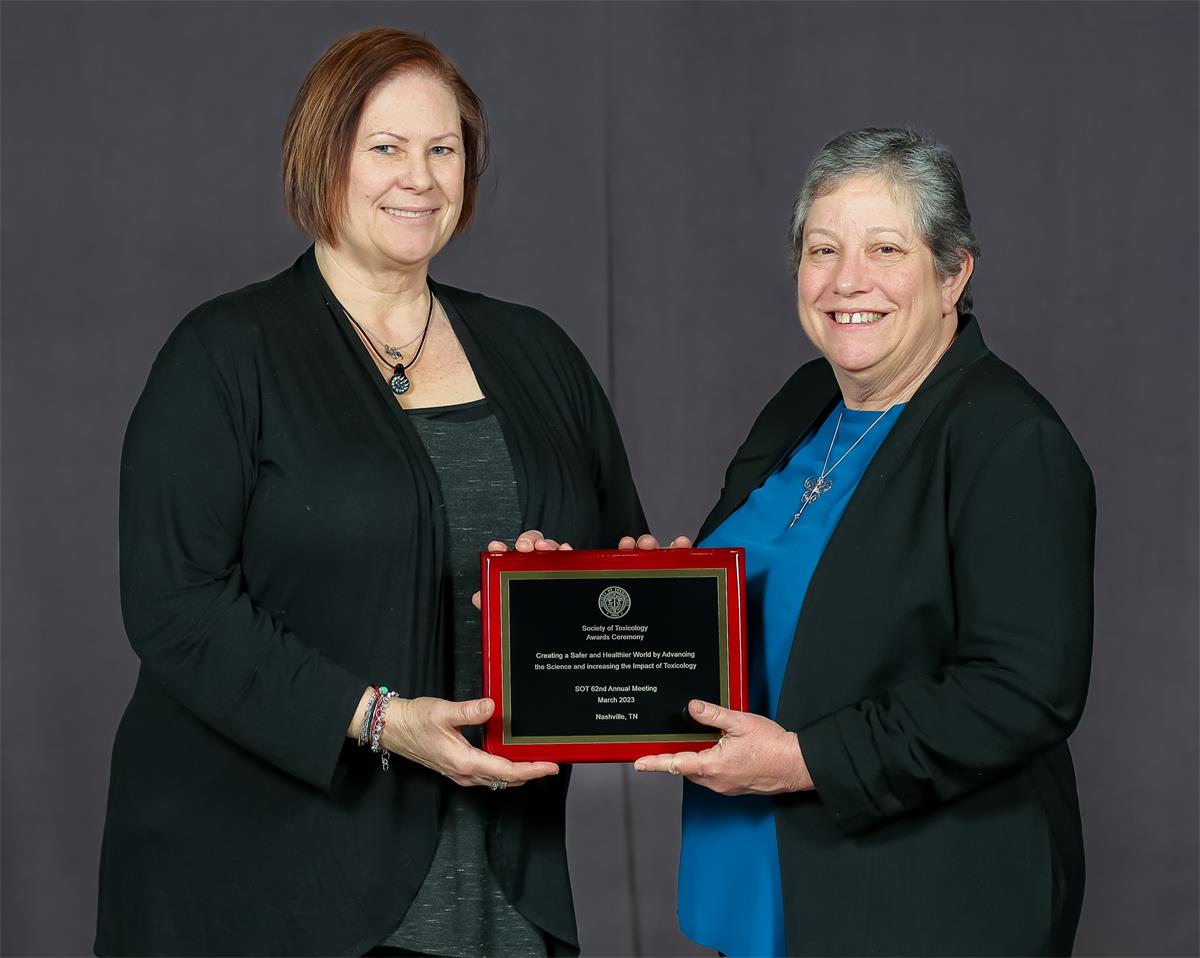
2023 SOT Public Communications Award
recipient Jamie C. DeWitt (left) with
SOT President Dori Germolec (right)
Nominations Open
The nomination deadline for SOT Awards is October 9. Nominations for either award should include both a primary and a secondary letter of nomination from SOT Full members, although the seconding letter can be signed by multiple individuals or even provided on behalf of an SOT Component Group. These letters should provide in layman’s terms an analysis of the nominee’s significant contributions and how they apply to the award criteria. The strongest nomination packages include two letters that are distinct from one another to offer more detailed support of the candidate’s qualifications. Letters of nomination should be specific and descriptive while remaining concise. The Awards Committee will review only the two letters required to complete the nomination; no additional letters will be considered.
Nominations also should include the nominee’s up-to-date CV that is limited to 10 pages in length; it should highlight the candidate’s most significant professional accomplishments as they relate to the criteria for the award. Awards Committee members are required to review only 10 pages of each CV, so submitting a longer CV does not strengthen an award nomination.
For more information on making a nomination, please review the “Awards Review Process and FAQs” web page of the SOT website. Please direct any inquiries to SOT Headquarters.
Please note that to ensure a diversity of nominees, there is a two-year grace period for SOT Awards. Preference will be given to nominees who have not received one of the following SOT awards in the past two years: Achievement, Arnold J. Lehman, Distinguished Toxicology Scholar, Education, Enhancement of Animal Welfare, Founders, Leading Edge in Basic Science, Merit, Public Communications, Toxicologist Mentoring, Translational Impact, Translational/Bridging Travel, and Undergraduate Educator Awards.
#Communique:SOTNews
#Awards