SOT is pleased to announce that Daniel A. Gorelick, PhD; Amie K. Lund, PhD; Fjodor Melnikov, PhD; and Alison Pecquet, PhD, DABT, have been elected to serve on the Nominating Committee for 2026–2029. These individuals bring experience from industry and academia, along with a shared commitment to thoughtful leadership, broad representation, scientific excellence, and the continued advancement of toxicology.
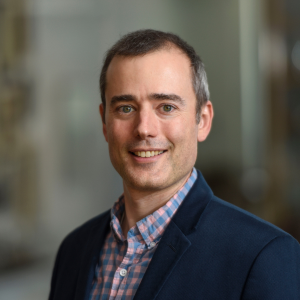
From the Regional Chapters: Daniel A. Gorelick
Dr. Gorelick is an Associate Professor with tenure at Baylor College of Medicine, where he leads a research program using zebrafish to uncover how environmental chemicals influence embryonic development. An SOT member since 2017, Dr. Gorelick has been active in the Lone Star Regional Chapter, serving in nearly every leadership role, including Secretary, Vice President, President, Past President, Councilor, and Treasurer. He has also served on the Regional Chapter Collaboration and Communication Committee and is a member of the Molecular and Systems Biology Specialty Section.
Dr. Gorelick regularly serves on study sections for the National Science Foundation, US Environmental Protection Agency, and National Institutes of Health, including panels for R01 grants and F30/F31/F32 fellowships. As Editor-in-Chief of the journal Biology Open, he led the creation of the Fast & Fair peer review program, which uses pre-contracted, paid reviewers to deliver authors decisions with high-quality reviews within seven business days of submission. He also brings policy experience from his time as a AAAS Science & Technology Policy Fellow at the US Department of State, where he worked as a science advisor. Across research, publishing, and federal service, Dr. Gorelick has built his career around improving how science is evaluated and championing the people who make it stronger.
Goals for SOT
I will fearlessly identify the most science-based, data-driven, collaborative humans in our ecosystem. Scientists who can decode acronyms, survive committee work, and still maintain enough integrity to return their peer reviews before the deadline. Or at least within the same fiscal year.
I will gently but firmly recruit these individuals using tried-and-true strategies such as (1) “You’d be amazing at this.” (2) “It won’t take as much time as you think.” Technically true if you think it will take forever. (3) Cookies. Always cookies. Together, we will assemble leadership slates so strong they will make other scientific societies whisper, “How are they doing that? Are they bribing people?” And the answer will be, “Yes. With cookies.”
Ultimately, my goal is simple: create leadership that is sharp, unstoppable, and fully equipped to launch SOT into the future. A future that is, without question, more diverse.
From the Membership-at-Large: Amie K. Lund
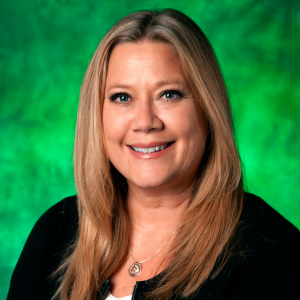
Dr. Lund is a Professor in the Biological Sciences Department and the Director of the Advanced Environmental Research Institute at the University of North Texas. Dr. Lund’s research program in environmental toxicology investigates the mechanisms underlying the detrimental effects of inhaled air pollutants on cardiometabolic health, including signaling pathways resulting from exposure-mediated dysregulation of the gut microbiome, adipose tissue, and renal system.
Dr. Lund obtained her PhD in biomedical sciences, with a focus on cardiovascular toxicology, from the University of New Mexico and completed her postdoctoral fellowship at Lovelace Biomedical Research Institute. She is the author or co-author of more than 60 peer-reviewed journal articles and book chapters and regularly serves on National Institutes of Health and American Heart Association study section panels. An SOT member since 2003, Dr. Lund has held leadership roles in the Lone Star Regional Chapter and has served on SOT Committees, including the Initiatives for Development and Engagement Committee and the Regional Chapter Collaboration and Communication Committee.
Goals for SOT
My goals and objectives for serving on the Nominating Committee would include (1) promoting leadership excellence through assisting with the identification of candidates with demonstrated leadership ability, achievements, and dedication to advancing the field of toxicology, including through education, to serve within SOT; (2) ensuring representation across scientific disciplines, career stages, geographic regions, employment sectors, and demographic backgrounds that reflect the SOT membership; and (3) supporting succession planning and long-term sustainability by recognizing emerging leaders and fostering pathways for future service opportunities that align with the Society’s Strategic Plan and values.

From the Specialty Sections: Fjodor Melnikov
Dr. Melnikov is a Senior Principal Data Scientist in Computational Toxicology at Genentech with more than nine years of experience in data science, AI/ML, biological modeling, and small molecule design. His current work focuses on developing and validating new approach methodologies for drug safety assessment and leading translational research that bridges in silico, in vitro, and in vivo systems. This work spans multi-omics data analytics, mechanistic modeling, and predictive toxicology, with a strong emphasis on ethical data use, cross-sector collaboration, and reduction of animal testing.
Dr. Melnikov earned his PhD in computational chemistry and toxicology from Yale University, where he developed integrated in vitro-in silico approaches to molecular design and safety prediction. He is the author or co-author of 22 peer-reviewed articles, including seven first-author articles. An SOT member since 2013, he has served in several roles within the Computational Toxicology Specialty Section, including Graduate Student Representative, Secretary, Vice President-Elect, Vice President, and President. He also is an active contributor to the Society of Toxicology and the American College of Toxicology and is recognized for advancing the integration of AI, bioinformatics, and computational methods into modern toxicological science.
Goals for SOT
Specifically, I aim to promote the seamless integration of emerging omics technologies, bioinformatics tools, and computational frameworks into modern toxicity assessment.
As part of this effort, it is essential to encourage discussion and innovation around the development, validation, and application of in vitro and in silico new approach methodologies (NAMs) for chemical screening and regulatory evaluation. In the long run, NAMs will enhance our understanding of compound safety and toxicity mechanisms, accelerate the delivery of safer medicines to patients, and reduce animal testing.
In the near term, however, it is critical to strengthen the SOT community’s understanding of computational and AI-based approaches. A stronger bridge between experimental and computational scientists will accelerate translation from molecular perturbations to human-relevant outcomes, ultimately guiding safer innovation and responsible chemical stewardship. Furthermore, greater AI literacy will ensure transparency, reproducibility, and effective application of in silico tools in toxicology. This vision aims to position SOT as a leading organization in toxicity and chemistry data exchange and in the development of computational approaches that advance rigor, transparency, and collaboration in the service of public health.

From the Specialty Sections: Alison Pecquet
Dr. Pecquet is a Human Safety Expert at Syngenta Crop Protection. She received her doctorate in toxicology from the University of Cincinnati, her master’s in zoology from Miami University, and is a Diplomate of the American Board of Toxicology. Her professional career in public health is based on a commitment to the development of safer environments for all.
Dr. Pecquet has worked for nonprofit, academic, and industry organizations throughout her career, including close collaboration with government partners. Her nontraditional, nonlinear career has allowed her to contribute to a broad spectrum of risk assessment challenges, ranging from derivation of toxicity reference values to ecological risk assessments, spanning diverse environmental chemicals and routes of exposure. Her work has been applied to occupational exposure scenarios, pharmaceuticals, consumer products, water and air contaminants, and dietary food contaminants, among others. Her current areas of interest include incorporating hazard- and exposure-based new approach methodologies to reduce whole animal testing and utilizing weight of evidence frameworks to better characterize risk.
Goals for SOT
I am committed to advancing the Society’s mission of creating a safer and healthier world through strategic, inclusive, and forward-thinking leadership development.
Given our polarized political landscape, I will prioritize candidates who bridge science with policy and rulemaking, ensuring SOT leadership can continue to effectively engage regulatory agencies, legislative bodies, and the public by translating complex science into actionable public health guidance.
I believe cultivating sectoral and disciplinary balance is critical and will recruit candidates across the full spectrum of toxicology and subdisciplines, seeking leaders who navigate diverse stakeholder perspectives through cross-sector collaboration, mentorship, and community building. Elevating new voices means deliberately seeking candidates beyond the usual suspects, who bring dissenting opinions and innovative perspectives and who question established practices while creating a safe space for constructive debate.
I will accomplish these goals through proactive outreach, transparent communication, and collaboration with SOT Committees, Specialty Sections, Special Interest Groups, and Regional Chapters, as well as general membership. An open dialogue helps to identify emerging leaders and to define desired leadership qualities. By serving on the Nominating Committee, I aim to ensure that the SOT leadership reflects the breadth, depth, and future of toxicology, positioning our Society to proactively shape a safer, healthier, and more equitable world.
The information provided in this blog is based on biosketch materials submitted for use as part of the election ballot. This information is being shared as part of official duties and should not be interpreted as personal or professional opinions.
#Members
#Communique:SOTNews
#Elections