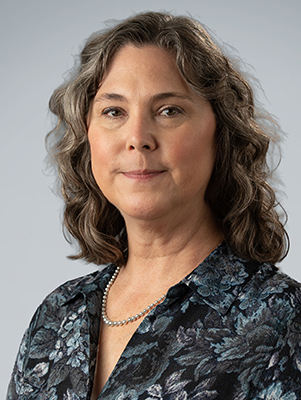
This award recognizes a scientist whose recent (within the last 10 years) outstanding clinical, environmental health, or translational research has improved human and/or public health in an area of toxicological concern.
Alison C. P. Elder, PhD, is recognized with the 2026 SOT Translational Impact Award for her pioneering translational research on inhaled engineered nanoparticles and ambient air pollutant aerosols, work that has helped connect real-world exposure and dosimetry to health-relevant outcomes and human risk evaluation.
After earning her PhD in environmental toxicology from the University of California Irvine and completing postdoctoral training at the University of Rochester, Dr. Elder joined the University of Rochester faculty in 2000 and is now an Associate Professor, serving as Director of the Environmental Health Sciences Center’s Inhalation Exposure Facility and Co-Director of the Toxicology Training Program.
A hallmark of Dr. Elder’s translational impact is her focus on exposure and dose characterization that supports meaningful exposure–dose–response relationships. Her work has emphasized designing studies with human dose relevancy, accounting for dose rate, and applying dosimetry modeling (including multiple-path particle dosimetry) to connect animal inhalation studies to deposited doses in specific regions of the human respiratory tract.
Dr. Elder’s findings have also contributed directly to practical guidance that protects health. As an example, her research demonstrates the importance of particle surface area as a determinant of lung effects, which has helped inform occupational exposure guideline development for poorly soluble particles, including work relevant to the American Conference of Governmental Industrial Hygienists (ACGIH) and the National Institute for Occupational Safety and Health; she has also served on the ACGIH Threshold Limit Value Chemical Substances Committee (Dusts and Inorganics Subcommittee Co-Chair).
Beyond the respiratory tract, Dr. Elder’s inhalation studies have advanced the translational understanding of ultrafine particle impacts in extrapulmonary systems. Her work with manganese oxide ultrafine particles (as a model of welding fume exposure) helped demonstrate brain accumulation in part via olfactory neuronal transport, and her studies of ultrafine particles and inflammatory changes in the cardiovascular and central nervous systems have helped catalyze broader evaluation of neurodegenerative, inflammatory, and behavioral effects relevant to particulate matter health assessments.
Dr. Elder continues to apply this translational approach to emerging concerns, including airborne nano- and microplastics, aiming to close knowledge gaps on exposure pathways so that animal studies can be designed with strong translational backing.
Dr. Elder joined SOT in 1992 and has contributed extensively through Society leadership and service, including roles such as President of the Nanoscience and Advanced Materials Specialty Section, Secretary/Treasurer of the Inhalation and Respiratory Specialty Section, and Councilor and Secretary/Treasurer of the Lake Ontario Regional Chapter.
For extensive research that has informed occupational health and other public health safety guidelines, Dr. Elder epitomizes the ideals of the SOT Translational Impact Award.
#Awards
#Communique:SOTNews