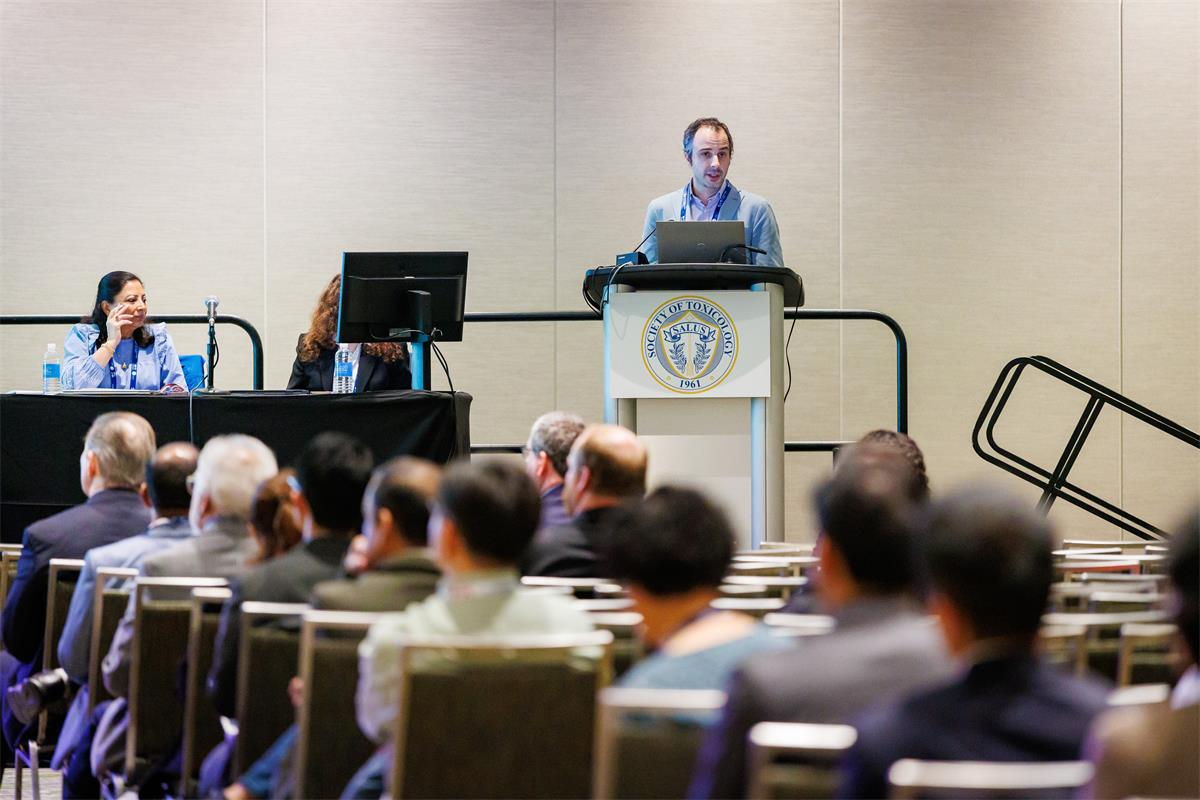
Returning to the Annual Meeting are Hot Topic Sessions, which are 90-minute sessions addressing timely research. The Scientific Program Committee (SPC) received a large number of Hot Topic proposals—thank you to all submitters. Two Hot Topic Sessions were selected for presentation in San Diego.
Mind Over Microplastics: Exposure, Mechanisms, and Emerging Regulatory Frontiers
Tuesday, March 24, 1:00 PM to 2:30 PM
Micro- and nanoplastics (MNPs) infiltrate the environment at exponentially increasing rates on a global scale. Public and scientific concern is escalating as MNPs are increasingly detected in humans and shown to accumulate across biological systems, with biologically potent effects ranging from the acute toxicity of MNP-derived 6PPD-quinone in Coho salmon to diverse functional impacts observed in experimental models. Despite these emerging lines of evidence, it remains unclear how MNPs distribute within organisms, to what extent and by which mechanisms MNPs and their chemical constituents alter biological function, and how such challenges can be addressed within existing regulatory paradigms. This session integrates three complementary perspectives spanning exposure, mechanistic toxicology, and regulatory action to confront these accelerating concerns. The first presenter reveals a previously unappreciated exposure footprint of MNPs in the human brain. Nanoplastics were found to preferentially localize to the frontal cortex, suggesting selective uptake pathways, potentially involving olfactory transport or metabolic demand. These findings raise pressing questions about the functional consequences of internalized MNPs on human health. Presenter two shifts the focus to chemical constituents released from tire-wear particles, a major source of environmental MNPs. Mechanistic studies indicate that neurobehavioral outcomes arise from interactions among tire-derived constituents rather than single-chemical actions. This work establishes MNP-associated leachates as biologically active agents that can modulate nervous system function and behavior. The third presenter highlights a regulatory response to the global challenge of MNPs, detailing California’s 2025 Safer Consumer Product Program initiative to designate MNPs as Candidate Chemicals. By enabling lifecycle-based evaluation and prioritization of products, this approach establishes a pathway for targeted mitigation strategies to reduce human and environmental exposure. Together, this session highlights growing human and environmental exposure to MNPs, elucidates mechanism-driven neuroactive effects arising from complex MNP-derived chemical mixtures, and illustrates how emerging science can guide targeted regulatory strategies. Interdisciplinary integration of exposure assessment, mechanistic toxicology, and policy is essential to address the global MNP challenge.
Here Comes the Sun(screen): Bemotrizinol and Reshaping the Future of Sunscreen Safety Assessment
Wednesday, March 25, 11:00 AM to 12:30 PM
The US Food and Drug Administration (US FDA) has proposed to make bemotrizinol the first new sunscreen active ingredient available in the US since 1991, 2. If the agency’s proposed order on the matter is finalized—decision expected mid-2026—it will be a breakthrough in over-the-counter (OTC) drug products in the US. The safety approval process for bemotrizinol, however, was unduly burdensome, and extensive preclinical and clinical testing was needed to achieve Generally Recognized as Safe and Effective (GRASE) status. Bemotrizinol was a requested addition to the sunscreen OTC monograph via Citizen Petition in 2002, and Time and Extent Application (TEA) in 2005 with extensive preclinical safety testing and more than five years on the market in multiple non-US countries before being reviewed again by the US FDA in 2018, with additional safety testing required. While this particular process is unique to the US FDA, complex and demanding regulatory reviews are a widespread issue. There are opportunities to incorporate modern toxicological processes (e.g., new approach methodologies [NAMs]) and still meet the highest standards of safety, such as GRASE. It is imperative that next-generation risk assessment (NGRA) is combined with fit-for-purpose testing based on 21st-century toxicological methods to streamline OTC drug approvals, accelerate innovation, and respond to the opportunity to modernize regulatory best practices in alignment with the US FDA Modernization Act 2.0. This session brings together leading experts from industry, regulatory bodies, and academia to discuss US sunscreen regulations and explore actionable opportunities for improving regulatory processes to enhance both the efficiency and effectiveness of sunscreen safety assessments.
For complete session details, including the presenters, please visit the Online Planner.
#2026AnnualMeeting
#Communique:AnnualMeeting
#Communique:SOTNews
#SOTActivities