
Scientists are expected to conduct experiments and report their findings with scientific integrity. The reason is that these findings guide public policy decisions and have real-world impacts. For more than a decade, some practitioners of toxicology and related fields have been waving the red flag that there’s an erosion of scientific integrity that must be seriously addressed. This was one of the drivers behind organizing the Roundtable Session “Does Toxicology Need a Reformation? A Debate About Scientific Integrity.”.
As briefly explained at the beginning of the session, integrity is defined by personal and societal norms, while science is a method that seeks to ensure that personal views do not interfere with the objective process of understanding the world around us. Here’s where things get interesting: when we talk about scientific integrity, there’s a clash between human nature, which tends to promote the self, and the need to step back and put the data first. The session continued with a detailed recapitulation of what happened during the 12 years that took to finally retract the article published in The Lancet in February 1998, whose lead author was Andrew Wakefield. The session continued with the experiences of the Society of Environmental Toxicology and Chemistry (SETAC), which has addressed scientific integrity in annual sessions. The panel also included voices opposed to the reform and discussion about a need to change how we communicate and train the new generations. Finally, there was a brief debate among the panelists, enriched by contributions and questions from the audience. The audience agreed that we need a revolution and that this revolution should extend to all the sciences.
The debate touched on the following areas:
Problem with the Current Incentive Structure
The publish-or-perish culture, emphasizing the quantity of publications rather than their quality, and a lack of recognition of negative results has turned scientific careers into a competition rather than a collaboration. During the panel discussion, one of the panelists indicated that the Hoover Institution interview Dr. Jay Bhattacharya Goes to Washington: Reforming Science from the Inside at NIH also touches on the topic of the incentive structure in science and how we reward all the wrong things.
Industry Motivated by Profit? It Actually Pushes Science Through Innovation.
A common saying is that industry is motivated by profit, and for that reason, it must be excluded from the table. Unfortunately, this underestimates the decades of work and money invested—that can easily be billions—to prove that a new product is safe and effective. This investment is necessary because the company must ensure the product does what it says it will, repeatedly. Many times, companies are willing to publish, but that type of science is boring to medical journals. Industry is the sector that enables the population to access wonderful, innovative ideas as products.
Publishing Industry, Use of Artificial Intelligence, and Review Issues
On the one hand, we have to recognize that it is valuable that some journals now accept the publication of negative results. This allows science to save time and money because if there’s peer-reviewed evidence that a chemical has no effect, it’s time to move in another direction.
On the other side, there are many things that corporate publishing must address. What are they doing to uphold scientific integrity? Publishers need to have decent quality assurance (QA) and quality control (QC) evaluations, such as statistical analyses reviewed by a statistician and pathology reviews by a pathologist. Unfortunately, this is not in their financial interest. Hence, what are they doing to bring in the cash? Additionally, artificial intelligence is being used by paper mills to fabricate scientific publications, either partially or entirely, many times against our own regulatory system.
Finding good reviewers was also a repetitive topic. Someone shared that, back in the “old days,” manuscripts were sent by slow mail to 2–3 reviewers, and good reviews were received within a relatively short time. In the era of hyperconnectivity, with 30–40 review invitations, half of the respondents say, “Good paper, thanks for letting me read it.” Finding a good review today has become an issue, and it’s our responsibility to effect change. Don’t turn down the opportunity to review papers, because that’s how we can keep building trust in good scientific research.
Bias and Conflicts of Interest
Bias is real. It might be presented as the idea that normative beliefs and advocacy may lead scientists to prioritize results that align with current pressures. Or it may also present as confirmation bias, where data is interpreted in a way that confirms one’s perception. As scientists, we should rigorously question established findings and be open to alternative hypotheses. Appreciate when one of your peers points out another direction, as it might get you out of a biased view.
Everyone has conflicts of interest, no matter the sector we are in. Conflicts of interest do not necessarily have to be financial; they could be ideological, philosophical, religious, sociological, or interpersonal. This is leading to the exclusion of high-quality science for non-technical reasons, causing bias in certain regulations.
Quality Assurance, Quality Control, and Reproducibility
There’s no doubt that we have a reproducibility crisis. As mentioned by a member of the audience, this was evidenced by the Begley and Ellis Nature paper “Raise Standards for Preclinical Cancer Research” in which a company tried to reproduce cancer experiments from 53 selected papers. Surprisingly, only six scientific findings (11%) were confirmed.
Playing loose with QA and QC in studies raises questions about data quality. This undermines public trust, as the implied credibility of “I am a scientist” is not a substitute for the lack of QA/QC. The problem is that if a student or recent graduate does not follow QA/QC standards, they are likely not to understand their importance and will pass the practice on to future generations.
During the discussion, a PLOS Medicine paper by John Ioannidis, published in 2005, “Why Most Published Research Findings Are False,” was also mentioned. In this paper, Ioannidis highlighted that most medical science publications are wrong and that this might be happening in toxicology due to the exclusion of high-quality science for non-technical reasons rather than technical ones.
Communication
The uncontrolled spread of scientific misinformation, enabled by predatory journals and clickbait techniques (fake science news stories used to generate revenue), is undermining public trust. We understand that misinformation is being used strategically to influence public policy and regulatory decisions; in other words, it is being used as a weapon against us. When we present, we tend to get excited about presenting the data and findings, and we start throwing a soup of acronyms. The public does not understand this; they feel that we are automatically excluding them from the discussion. We need to remember to speak in a common language and start practicing techniques that help us connect with our audience. For example, storytelling is a technique that includes a villain, a victim, and a hero. In summary, we need to do a better job of explaining to people that we might see the return of diseases from the Middle Ages if we dismantle the system as we know it.
Scientific integrity is the responsibility of everyone who is part of the system, regardless of sector (industry, academia, government, or nonprofit organizations). Small changes from each of us are required; otherwise, we will continue to erode the credibility of good science. This was an enriching debate that many of us think is a great topic for a SOT/EUROTOX Debate in the future.
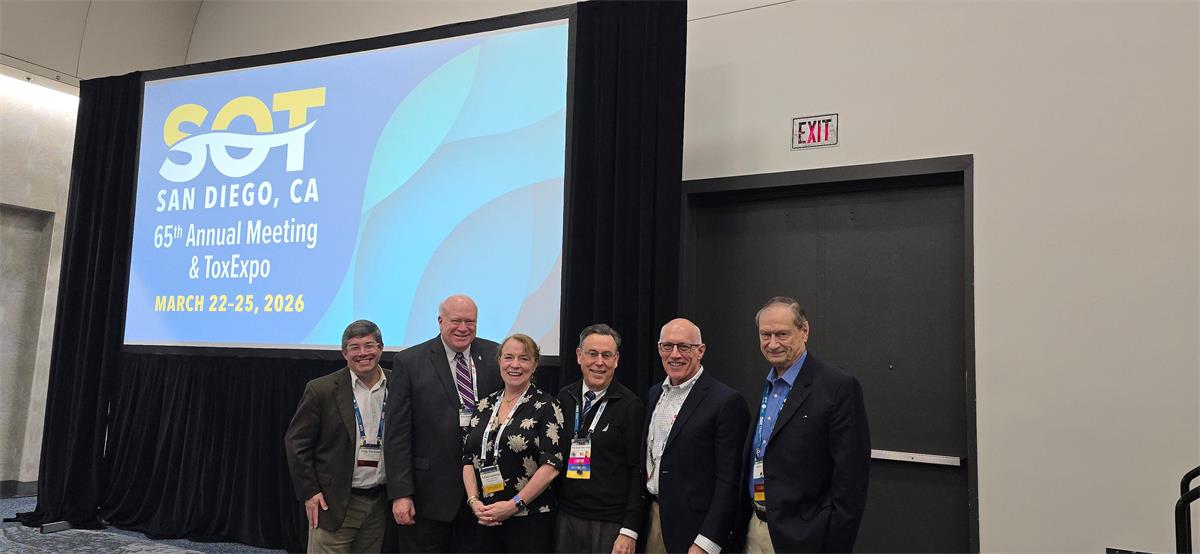
If you missed this session, check the on-demand recording to hear this incredible debate, which featured panelists Gregg Stanwood, Liza Lockwood, Bill Godfellow, Michael Dourson, Christopher Borger, Wally Hayes, and participating audience members. If you would like to check out more presentations about scientific integrity, check out the recordings of previous webinars organized and hosted by the SOT Sustainable Chemicals through Contemporary Toxicology (SCCT) and Ethical, Legal, Forensics, and Societal Issues (ELFSI) Specialty Sections, which are openly available (no login required) at https://www.toxicology.org/groups/ss/elsi/Events.asp.
This blog reports on the Roundtable Session titled “Does Toxicology Need a Reformation? A Debate About Scientific Integrity” that was held during the 2026 SOT Annual Meeting and ToxExpo. An on-demand recording of this session is available for meeting registrants on the SOT Online Planner and SOT Event App.
This blog was prepared by an SOT Reporter and represents the views of the author. SOT Reporters are SOT members who volunteer to write about sessions and events in which they participate during the SOT Annual Meeting and ToxExpo. SOT does not propose or endorse any position by posting this article. If you are interested in participating in the SOT Reporter program in the future, please email SOT Headquarters.
#SOTReporter